Why this matters: Understanding your employee handbook protects your rights, ensures workplace compliance, and helps you navigate your employment relationship successfully.

Day One Decision
Imagine it's your first day at a new job. Your manager hands you a thick employee handbook and says, "Read this when you get a chance." Most people never do—until they need it.
Quick Poll: What would you look for first in an employee handbook?
Pay & Benefits
Salary, overtime, and perks
Time Off
Vacation and leave policies
Rules & Conduct
What's expected of me
My Rights
Protections and policies
Why Employee Handbooks Matter
An employee handbook is more than just company rules—it's a legal document that defines the employment relationship. Understanding it helps you:
- Know your rights under federal and state employment law
- Understand expectations for conduct, performance, and attendance
- Access benefits you're entitled to receive
- Navigate challenges like disputes, harassment, or leave needs
Understanding Employment Relationships
The foundation of your employment is your classification and employment status. These determine your rights, benefits, and legal protections.
Employment-At-Will
🔑 Core Concept
In most U.S. states, employment is "at-will"—meaning either the employer or employee can end the relationship at any time, for any lawful reason, with or without notice.
What this means for you:
- You can resign at any time without giving a reason
- The employer can terminate your employment without cause (unless discrimination or retaliation)
- Only written contracts signed by authorized executives can modify at-will status
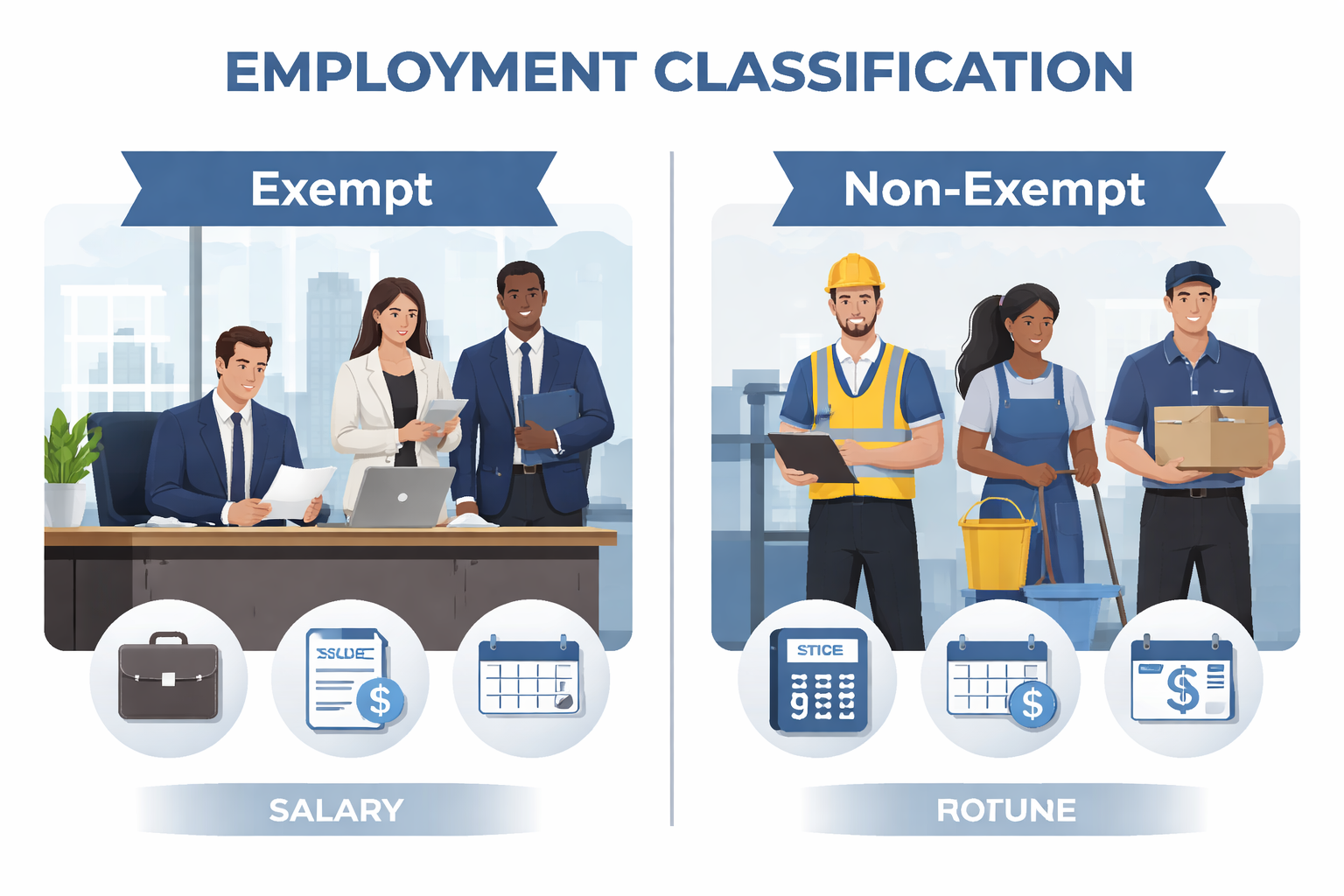
Employee Classifications
| Classification | Key Features | Overtime Eligible? |
|---|---|---|
| Exempt | Salaried, executive/professional/administrative roles | ❌ No |
| Non-Exempt | Hourly, covered by wage laws | ✅ Yes (1.5× pay) |
| Full-Time | 40+ hours/week, full benefits | Varies |
| Part-Time | Less than 40 hours/week, pro-rated benefits | Varies |
| Temporary | Fixed-term project work, limited benefits | Varies |
⚠️ Why Classification Matters
Misclassification can cost you thousands in unpaid overtime. If you're classified as exempt but spend most of your time on non-managerial tasks, you may be entitled to overtime pay.
Equal Employment Opportunity & Your Rights
Federal and state laws protect employees from discrimination and harassment. Understanding these rights is crucial for recognizing and reporting violations.

Protected Characteristics
Employers cannot discriminate based on:
🧑🤝🧑 Personal Identity
Race, color, national origin, sex, gender identity, sexual orientation
🙏 Belief & Background
Religion, creed, ancestry
📅 Age & Status
Age, marital status, pregnancy
♿ Disability
Physical or mental disability, genetic information
Reasonable Accommodations
Religious Accommodations
Employers must accommodate religious practices (prayer times, holidays, dress codes) unless it causes undue hardship. You must request accommodation in writing and work with your employer to find solutions.
Disability Accommodations (ADA)
Under the Americans with Disabilities Act, employers must provide reasonable accommodations (modified equipment, flexible schedules, accessible facilities) for qualified individuals with disabilities. Medical certification may be required.
✅ Your Responsibility
Accommodations aren't automatic—you must request them. Come forward if you need support, and engage in the "interactive process" with your employer to identify solutions.
Anti-Harassment & Discrimination
Workplace harassment creates a hostile environment and is illegal. Recognizing it and knowing how to report it protects everyone.

What Constitutes Harassment?
Harassment includes any unwelcome conduct based on protected characteristics that:
- Is made a condition of employment (explicit or implicit)
- Is used as a basis for employment decisions
- Creates a hostile or offensive work environment
⚠️ Examples of Prohibited Behavior
- Unwelcome sexual advances, requests for sexual favors
- Lewd, vulgar, or obscene remarks, jokes, posters, or cartoons
- Unwelcome touching, pinching, or physical contact
- Racial epithets, slurs, derogatory remarks, or stereotypes
- Harassment via email, social media, or electronic communications
Reporting Procedure
Step 1: Recognize
If you experience or witness harassment, don't ignore it. Document the behavior (dates, witnesses, what was said/done).
Step 2: Report
Immediately report to your supervisor or any member of management. Don't wait—the behavior will not stop on its own.
Step 3: Investigation
The company will conduct an investigation, interviewing witnesses and gathering evidence.
Step 4: Resolution
If improper conduct is found, the company will take corrective action (up to termination of the offender).
💡 Protection from Retaliation
You cannot be punished for reporting harassment in good faith. If you're not satisfied with your employer's response, you can file a complaint with the EEOC or your state's civil rights agency.
Knowledge Check: Employment Status
Which employee classification is typically eligible for overtime pay?
Hours of Work & Payroll Practices
Pay Periods & Overtime
Understanding how you're paid and when you're entitled to overtime protects your earnings.
Pay Schedule
Most companies pay weekly or bi-weekly. Know your pay date and what period it covers.
Overtime Rules
Non-exempt employees earn 1.5× regular pay for hours over 40/week (federal law).
Pre-Approval
Overtime must be authorized in advance by your supervisor. Unauthorized OT may violate policy.
Meal Periods
Employees working 6+ hours get a 30-min unpaid meal break (state law varies).
Time Tracking & Accuracy
⚠️ Critical: Accurate Time Records
Non-exempt employees must keep accurate time cards. Falsifying time records or altering them without supervisor approval is grounds for termination. Only hours actually worked count toward overtime—not PTO or holidays.
Payroll Deductions
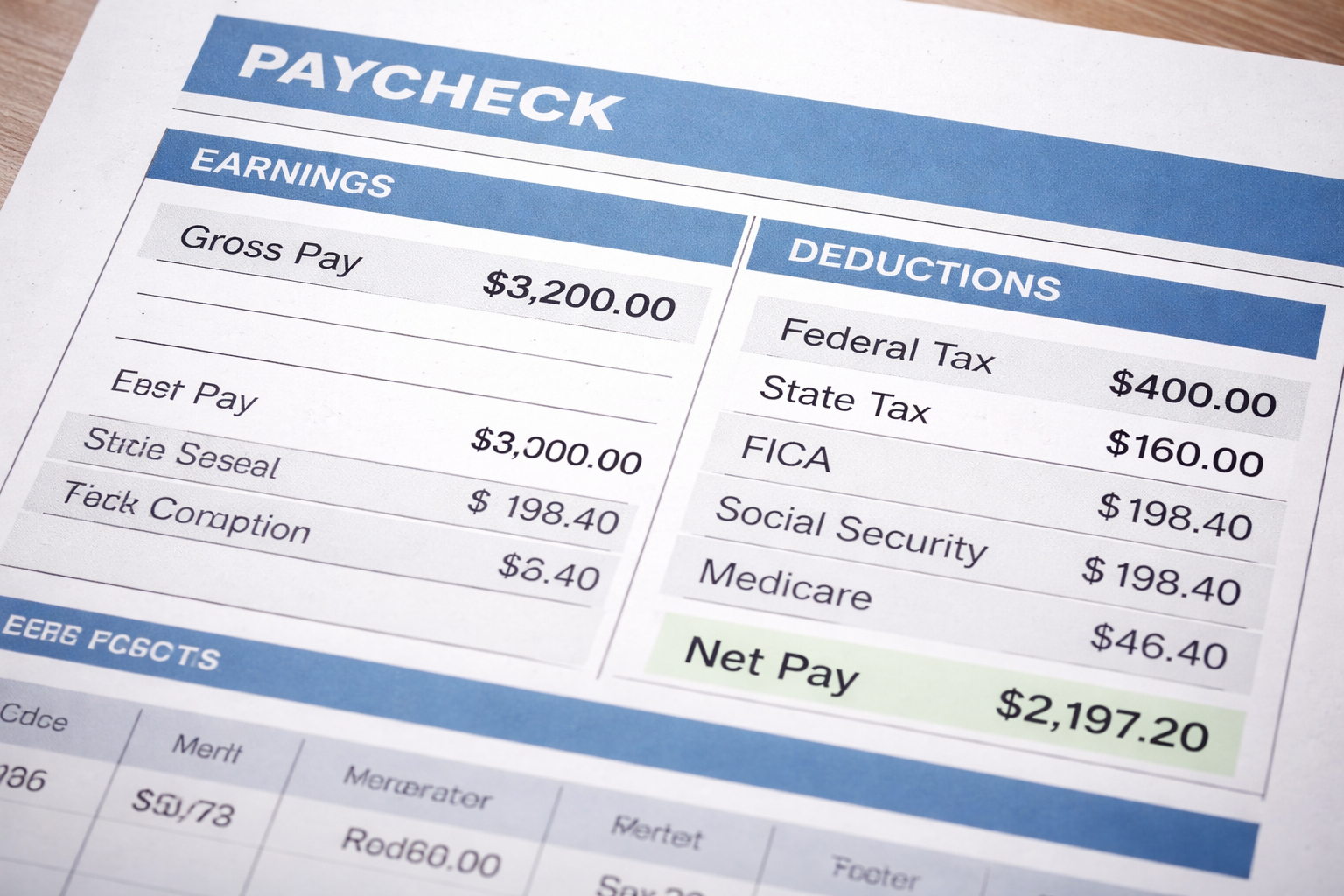
Your paycheck will have deductions for:
- Federal & State Income Tax: Based on your W-4 withholding elections
- Social Security & Medicare (FICA): Mandatory contributions
- State Disability/Family Leave Insurance: In applicable states
- Wage Garnishments: Court-ordered payments (child support, tax liens, etc.)
💡 Pro Tip: Direct Deposit
Enroll in direct deposit for faster, more secure payment. You'll still receive pay stubs showing your earnings and deductions.
Standards of Conduct & Discipline
Every workplace has expectations for behavior. Understanding them helps you avoid disciplinary action.
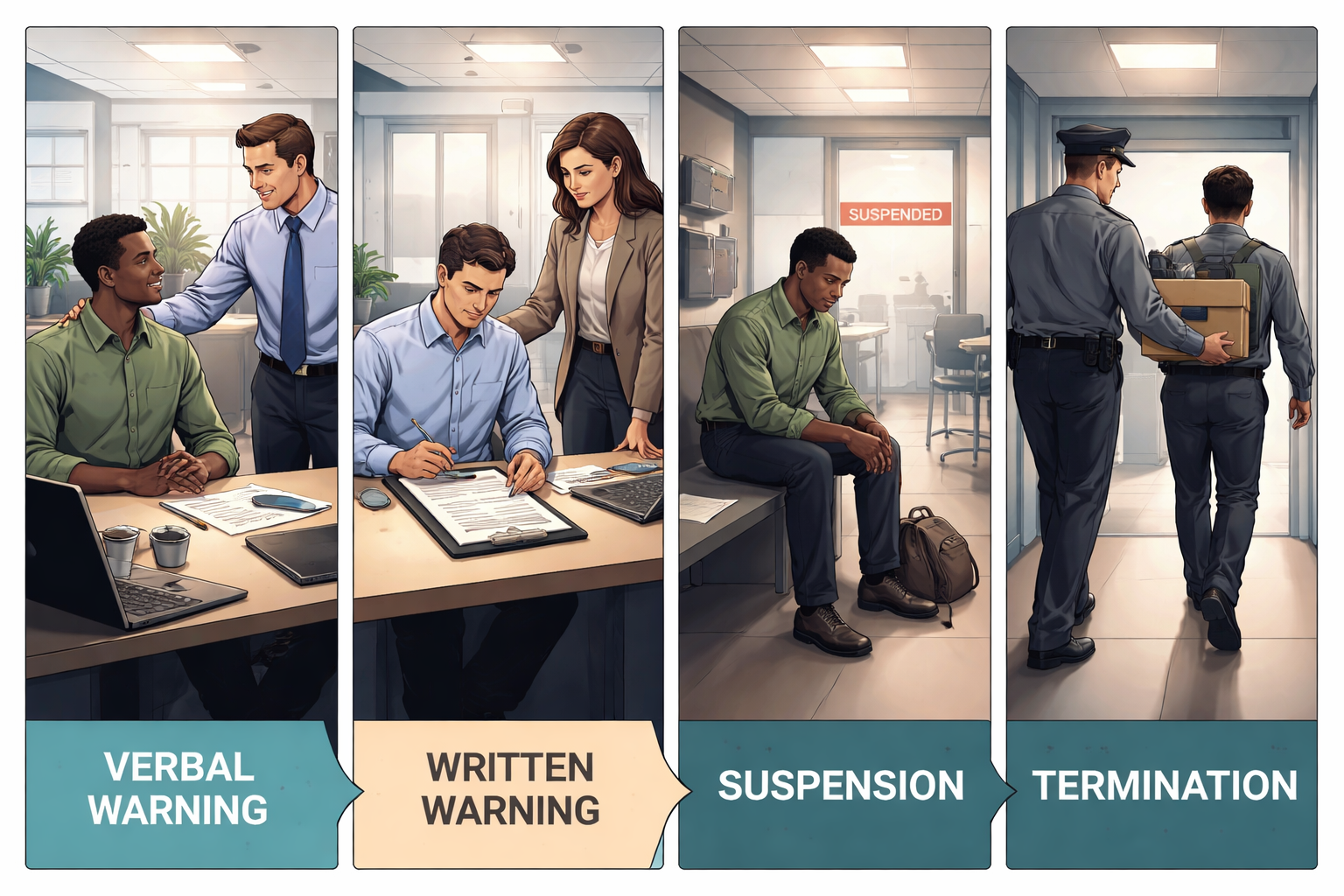
Progressive Discipline (Typical)
Verbal Counseling
Informal discussion about the issue and expectations for improvement.
Written Warning
Formal documentation of the problem placed in your personnel file.
Suspension
Temporary unpaid leave while the company investigates or as a disciplinary measure.
Termination
End of employment. For serious violations, this may be immediate (no prior warnings).
⚠️ Important: At-Will Caveat
Progressive discipline is not guaranteed. As an at-will employee, the company can skip steps or terminate immediately for serious misconduct.
Prohibited Conduct (Examples)
🚫 Dishonesty
Lying, falsifying records, theft
⚔️ Violence/Threats
Fighting, weapons, threats
💊 Substance Abuse
Drugs, alcohol on premises
🔒 Confidentiality
Unauthorized disclosure
📵 Technology Misuse
Inappropriate internet/email use
🏃 Attendance
Excessive absences/tardiness
Knowledge Check: Harassment Reporting
What should you do if you witness workplace harassment?
Privacy, Technology Use & Social Media

No Expectation of Privacy
🔍 Key Policy
Company property (computers, email, phones, desks, lockers, vehicles) is subject to inspection at any time without notice. You have no expectation of privacy when using company resources.
Acceptable Use Policies
📧 Email & Internet Use
Business use only. Personal use of company email and internet is prohibited. The company can monitor all electronic communications, override passwords, and review browsing history.
- No discriminatory, harassing, or obscene content
- No personal software installation
- No anonymous email or encryption programs
📱 Cell Phone Policy
Personal cell phones should be on silent/vibrate. Use confined to breaks and away from work areas. Excessive personal use can result in loss of privilege or termination.
Company-provided phones: Must comply with all conduct policies. Maintain confidentiality in public spaces.
📲 Social Media Policy
Personal social media: You may express personal views, but you must clarify you don't speak for the company. No use during work hours.
Company social media: Contacts acquired through company accounts (followers, friends, connections) are company property.
Prohibited: Disclosing confidential information, disrespecting colleagues/clients, damaging company reputation.
Confidentiality Obligations
Employees often sign Non-Disclosure Agreements (NDAs) protecting:
- Business strategy and financial information
- Customer and supplier lists
- Proprietary processes and trade secrets
- Personnel information
This duty extends beyond employment—you can't share confidential information even after you leave.
Employee Benefits & Time Off

Common Benefits
Health Insurance
Medical, dental, vision coverage (eligibility often 30-90 days)
Retirement Plans
401(k) with employer match after eligibility period
Paid Time Off (PTO)
Vacation, sick leave, personal days
Professional Development
Training, tuition reimbursement, certifications
Leave Policies
FMLA (Family & Medical Leave Act)
Up to 12 weeks of unpaid, job-protected leave for:
- Birth or adoption of a child
- Care for a family member with a serious health condition
- Your own serious health condition
- Military family leave
Eligibility: 12 months of service, 1,250 hours worked in last year, employer has 50+ employees within 75 miles.
Sick Leave
Most companies provide paid sick leave for personal illness or medical appointments. Some states mandate paid sick leave accrual.
Documentation: Absences over 3 days typically require a doctor's note.
Vacation & PTO
Vacation accrues based on tenure and classification. Requests must be approved in advance by your manager.
Use-it-or-lose-it: Some companies have caps on accrual or year-end forfeiture. Check your policy.
💡 Pro Tip: Enrollment Periods
Most benefits have strict enrollment windows (e.g., within 30 days of hire or during annual open enrollment). Missing these deadlines means waiting until next year.
Workplace Safety & Incident Reporting

Your Safety Rights
🛡️ OSHA Protection
Under the Occupational Safety and Health Act, you have the right to a workplace free from recognized hazards. You can report unsafe conditions to OSHA without retaliation.
Reporting Requirements
Workplace Injuries
Report immediately to your supervisor, no matter how minor. Delays can jeopardize workers' compensation claims.
Near Misses
Even if no injury occurred, report incidents that could have caused harm (e.g., slippery floor, equipment malfunction).
Safety Hazards
Alert your supervisor to any unsafe conditions (blocked exits, faulty equipment, chemical spills).
Threats or Violence
Report any threats, aggressive behavior, or weapons to security and HR immediately.
Emergency Procedures
Know your workplace emergency plan:
- Evacuation routes: Locate exits and assembly points
- Shelter-in-place: Where to go during severe weather or security threats
- Emergency contacts: Who to call for medical, fire, or security emergencies
- AED and first aid: Location of emergency equipment
✅ Your Responsibility
Participate in safety training, follow protocols, and speak up if you see something unsafe. Everyone plays a role in workplace safety.
Knowledge Check: Privacy Expectations
When using company computers and email, what expectation of privacy do employees have?
Lesson Summary
Key Takeaways
📋 Know Your Status
Understanding your employment classification determines your rights to overtime, benefits, and protections.
🛡️ Protected Rights
Federal and state laws protect you from discrimination and harassment. Report violations immediately.
💰 Pay & Benefits
Understand your pay schedule, overtime rules, and benefits enrollment deadlines to maximize your compensation.
📱 Privacy & Conduct
Company property is subject to inspection. Follow technology and social media policies to avoid discipline.
🏖️ Time Off
Know your leave rights under FMLA and company policies. Request time off properly and document medical needs.
⚠️ Safety First
Report injuries, hazards, and safety concerns immediately. You have legal protections for workplace safety reporting.
Resources & Next Steps
- Review your employee handbook—policies vary by employer
- Contact HR with questions about benefits, leave, or accommodations
- Document issues—keep records of harassment, discrimination, or safety concerns
- Know your rights—EEOC.gov and DOL.gov provide federal employment law guidance
Knowledge Assessment
You've completed the lesson content! Now it's time to demonstrate your understanding.
📝 Assessment Details
Questions: 10 multiple-choice questions
Passing Score: 80% (8/10 correct)
Time: Untimed—take as long as you need
Certificate: Awarded upon passing
Ready to begin? Click "Next" to start the assessment.
Question 1 of 10
What does "employment-at-will" mean in most U.S. states?
Question 2 of 10
Which of the following is NOT a protected characteristic under federal anti-discrimination laws?
Question 3 of 10
Non-exempt employees are entitled to overtime pay at what rate for hours worked over 40 in a week?
Question 4 of 10
What should you do immediately after witnessing workplace harassment?
Question 5 of 10
Which statement is true regarding privacy when using company computers and email?
Question 6 of 10
Under FMLA, eligible employees can take up to how many weeks of unpaid, job-protected leave?
Question 7 of 10
What is the first step in a typical progressive discipline process?
Question 8 of 10
Which of the following is true about reasonable accommodations for disabilities?
Question 9 of 10
When should you report a workplace injury?
Question 10 of 10
What can happen if a non-exempt employee falsifies their time records?